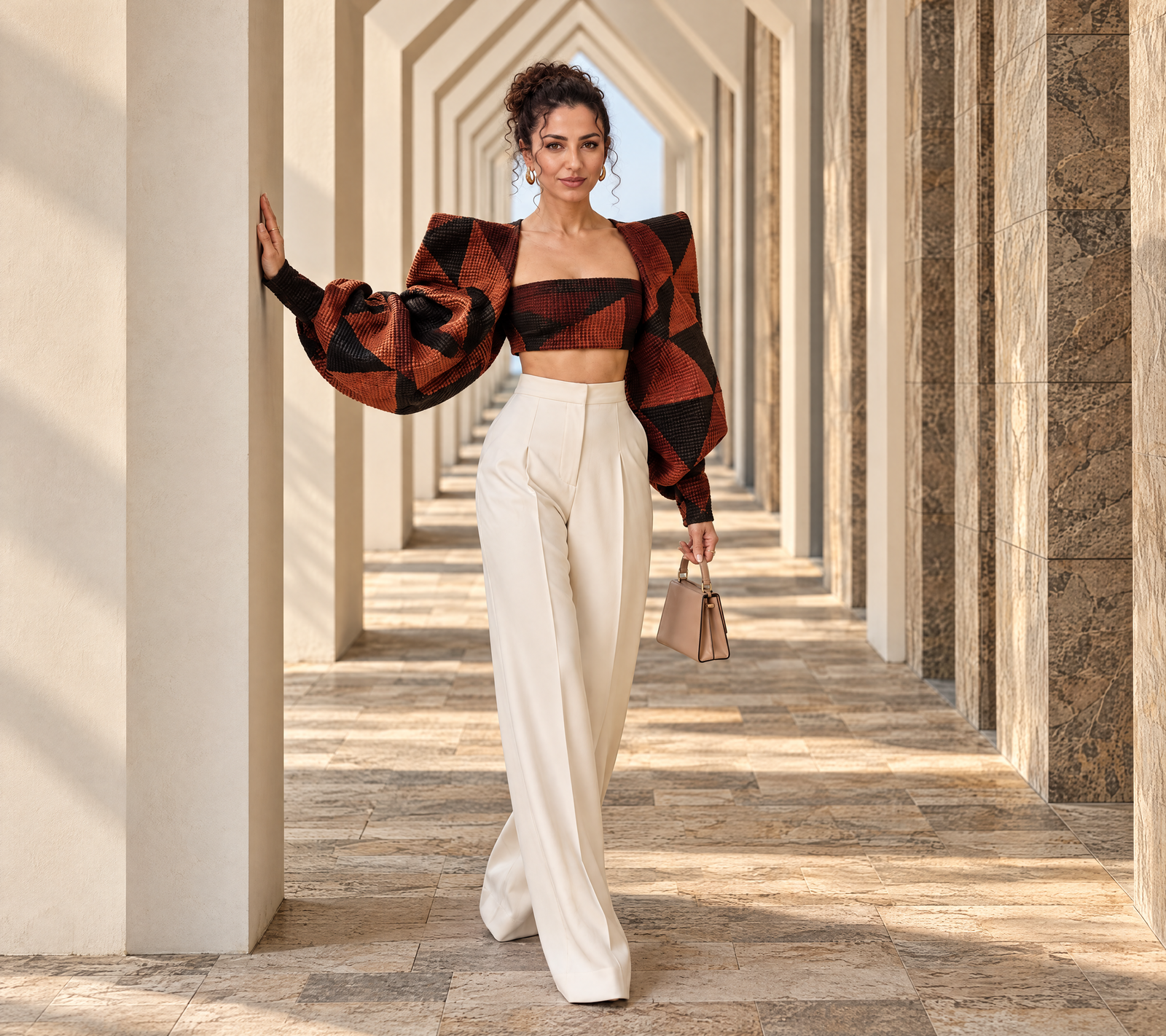


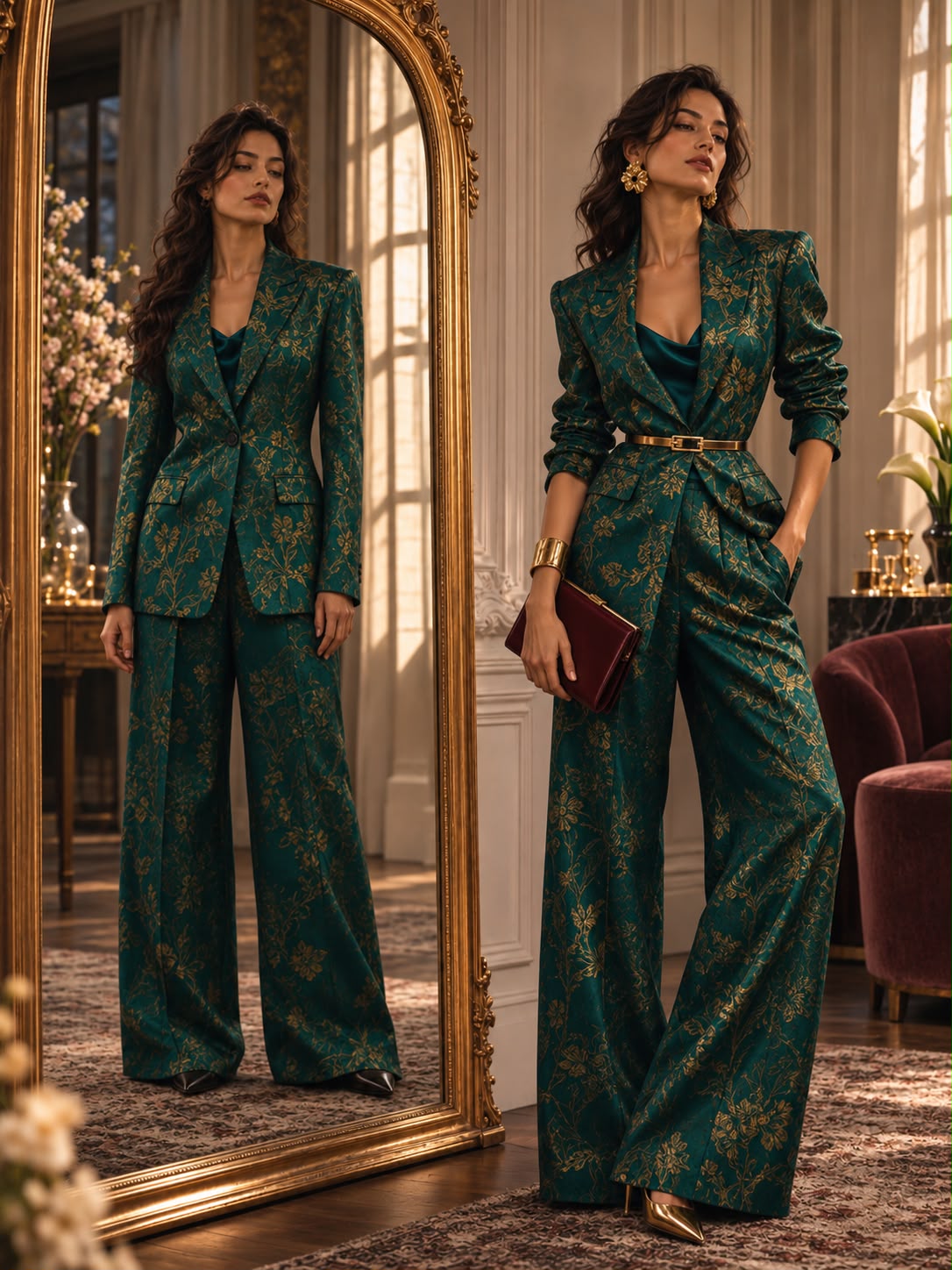
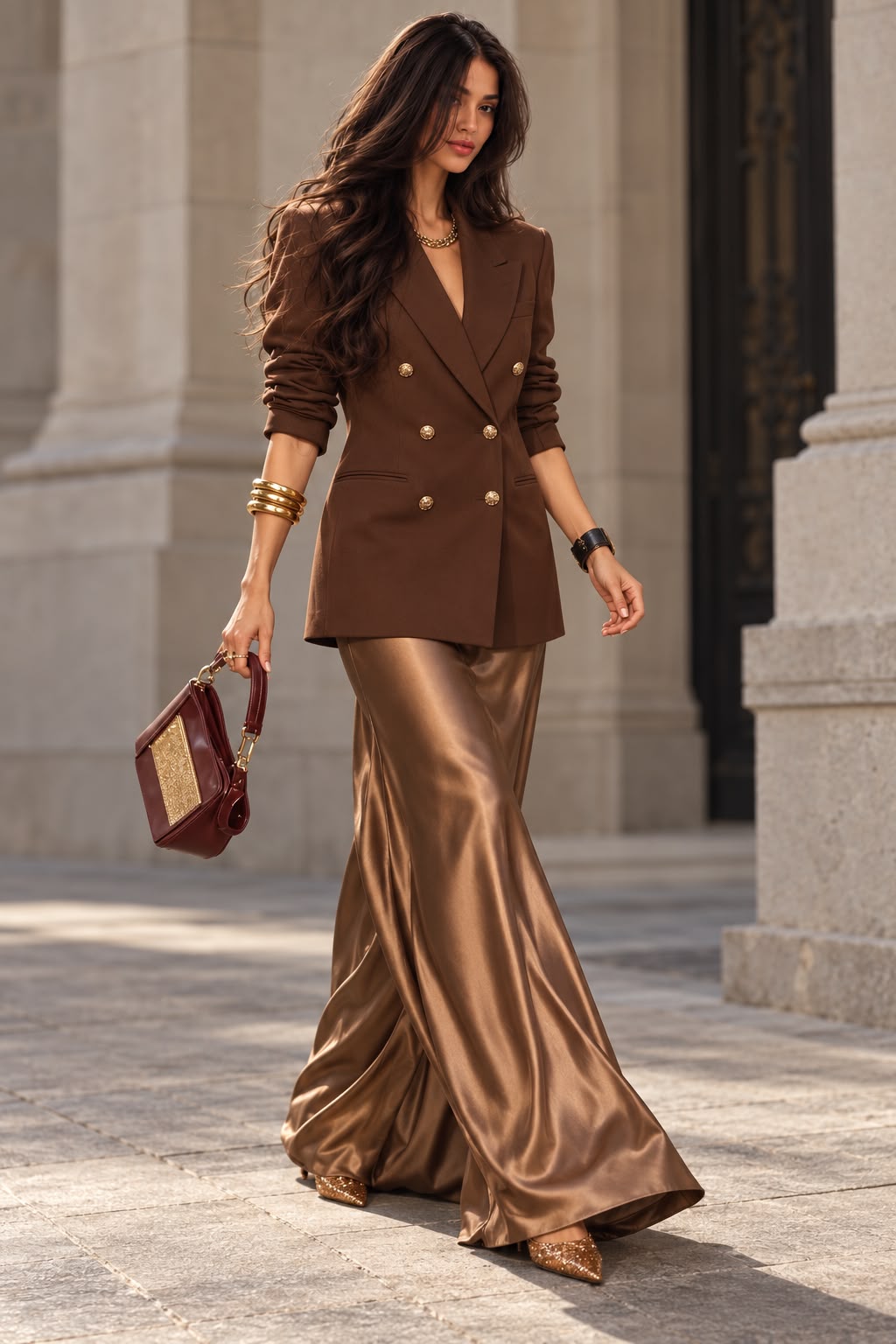
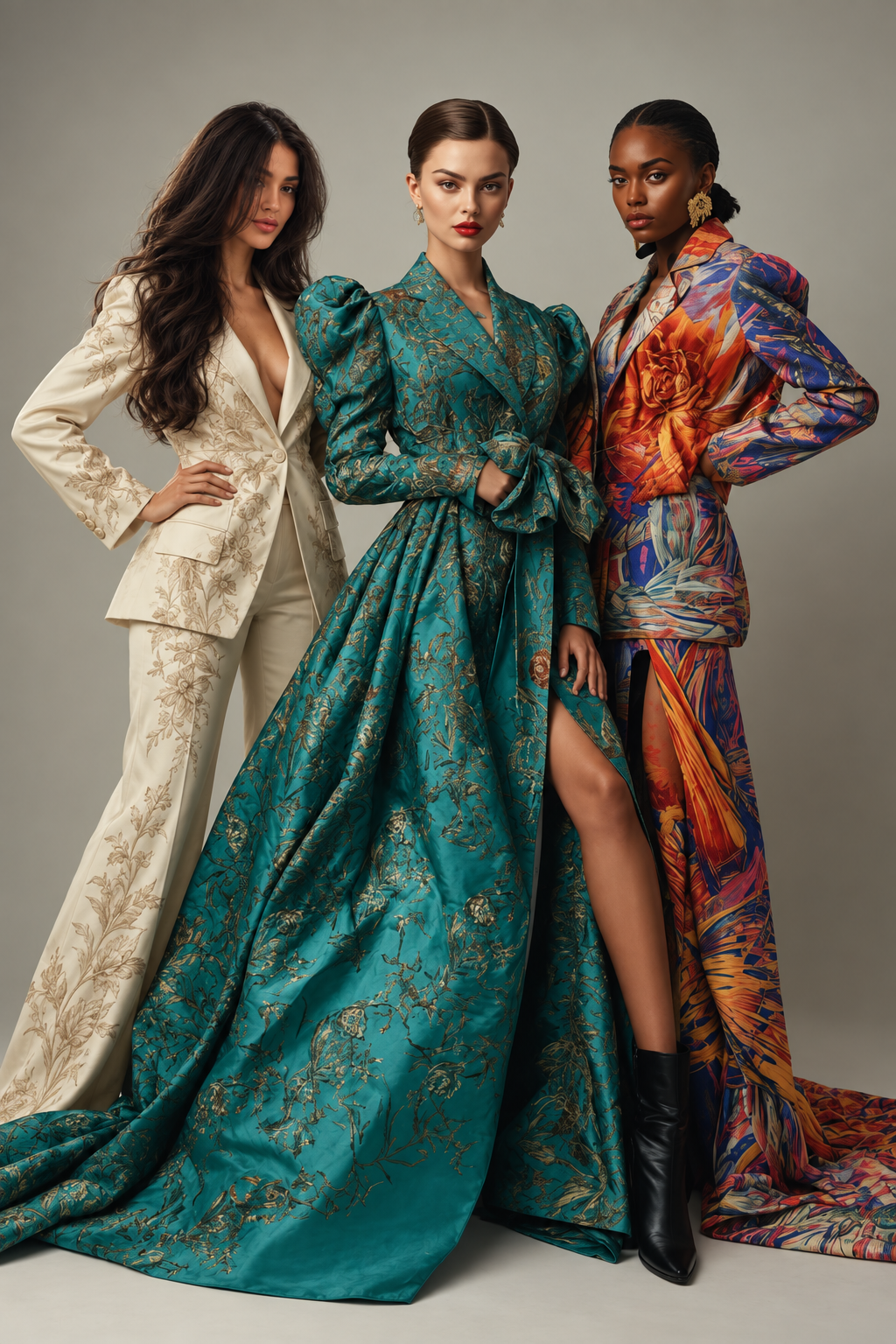



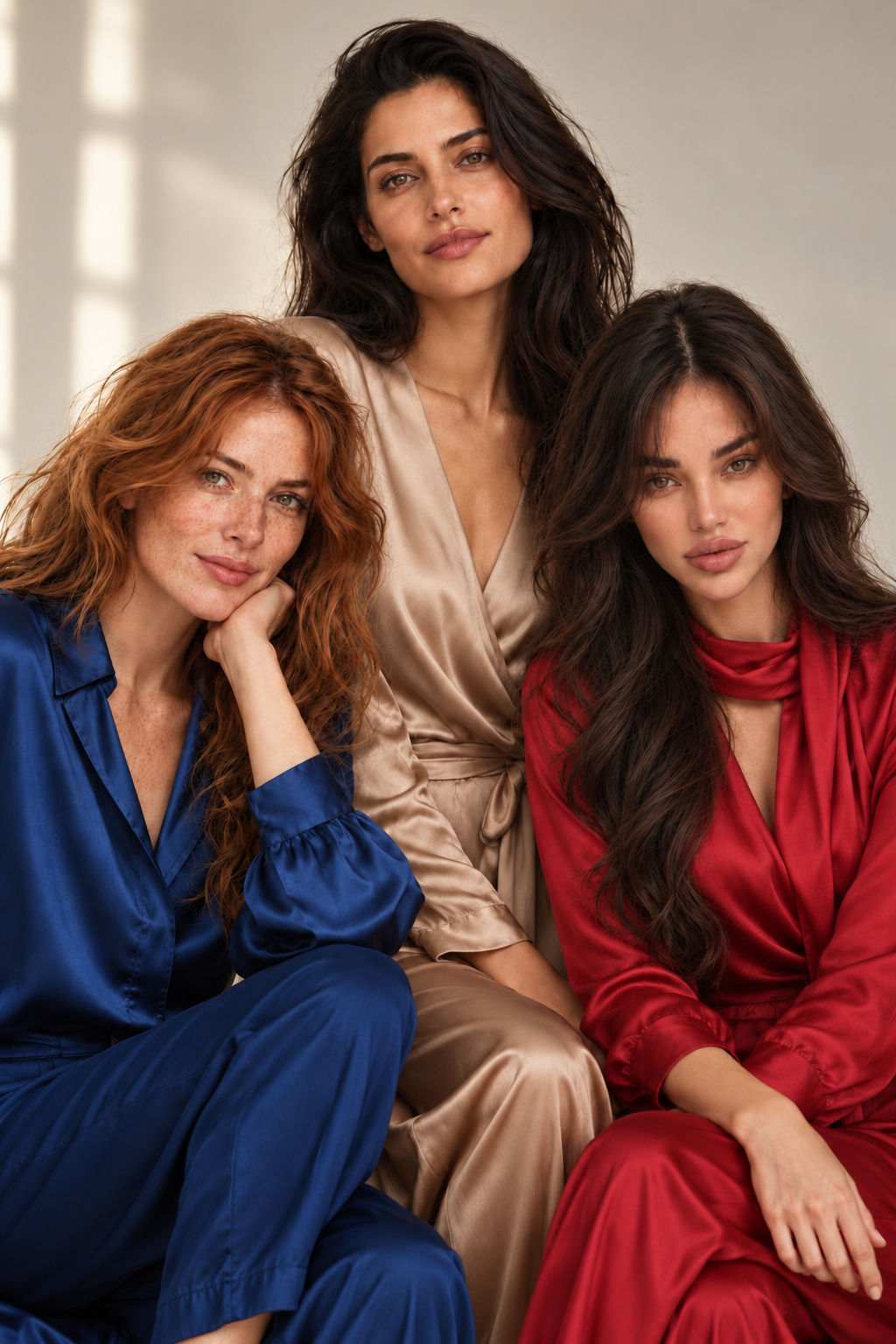


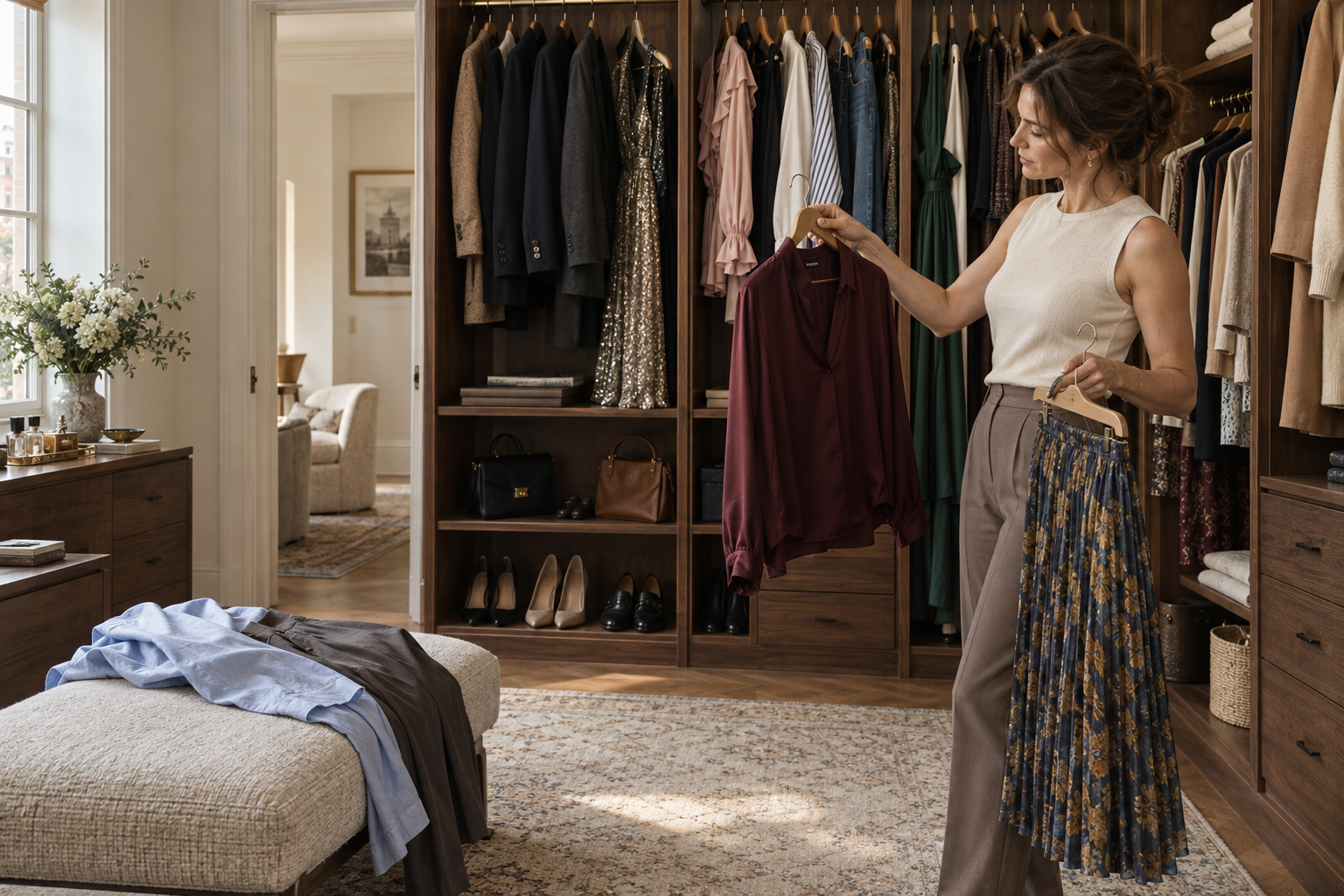


You've probably had this moment. A color looks perfect on the hanger. It looked wonderful on a friend, or on the woman in the photo that made you buy it. Then you hold it up to your face and something is off. Your skin looks a little tired. Your eyes don't stand out the way they usually do. The dress is doing all the talking, and you've quietly disappeared behind it.
Nothing is wrong with the color, and nothing is wrong with you. The two of you just don't agree.
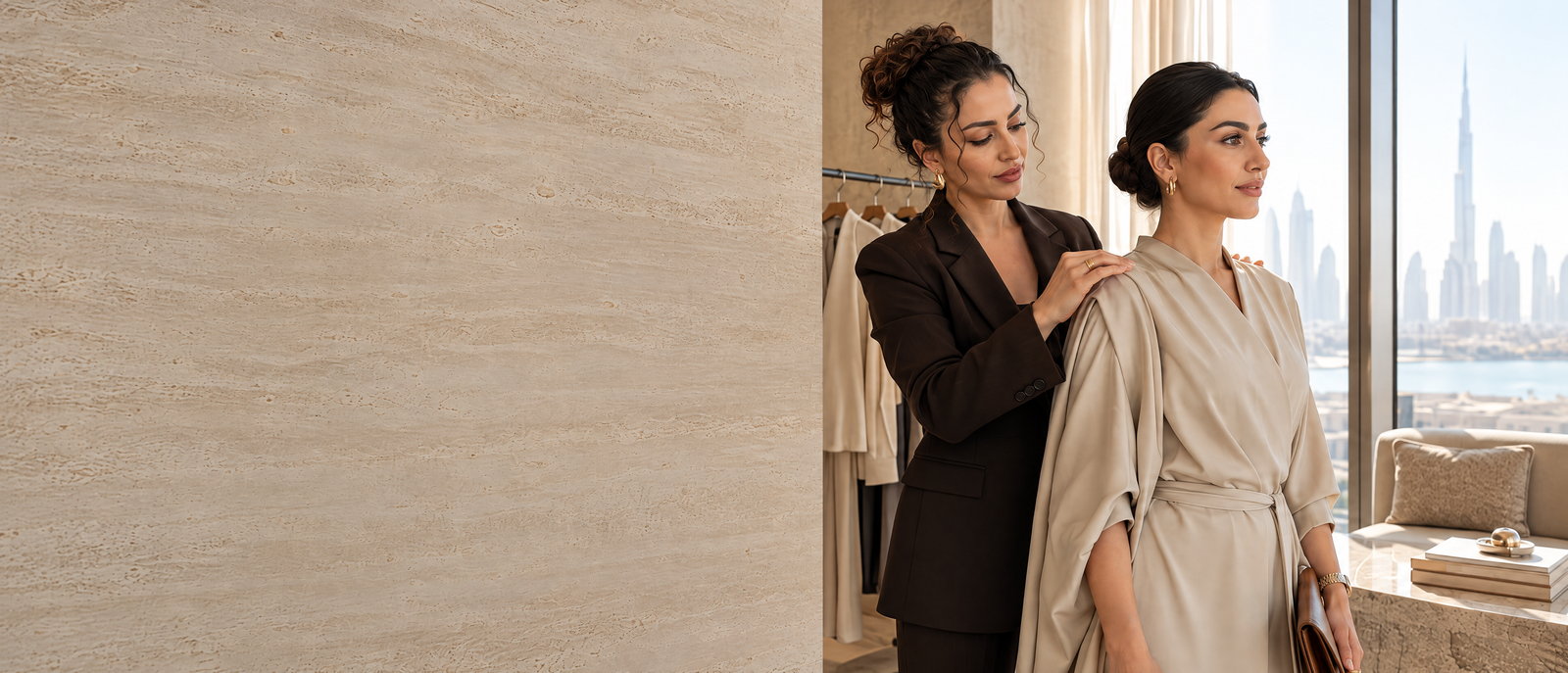
I see this in fitting rooms every week, and it's the single most common reason people book a personal color analysis with me. So here is what's actually happening, because once you understand it, shopping stops being guesswork.
A flattering color isn't simply one you like, or one that happens to be in fashion this season. It's a color whose qualities match the qualities already in your skin, hair, eyes and brows. Most advice stops at "warm or cool". That's a fair place to start, but it's only one of four things I look at.
Temperature: warm, cool, or somewhere in between
Temperature is whether your natural coloring leans golden or leans pink.
Warm coloring has honey, peach, caramel or olive running through it. Cool coloring reads more pink, blue-based, ashy or icy. Plenty of people sit somewhere in the middle, which is why that warm-or-cool quiz you did online probably gave you a confusing answer.
Being warm doesn't mean you can only wear warm colors, and being cool doesn't ban you from anything golden. What matters is how much warmth or coolness your face can carry before it starts to fight the color.
Red is the easiest way to see this. Two women can both look wonderful in red. One glows in tomato, coral or brick. The other comes alive in cranberry, cherry or a blue-toned red. Same color family, different temperature, and each of them looks slightly flat in the other's version.
Depth: how light or dark you read overall
Depth is the impression of lightness or darkness someone gets when they see you from across a room.
Hair plays a big part, but it isn't the whole story. Skin, brows and eyes all contribute. Someone with naturally deep coloring carries espresso, deep navy, burgundy or forest green without effort. Someone lighter usually looks more at ease in softer versions of those same shades.
That doesn't make dark colors off-limits for lighter coloring. It means placement matters more. A deep navy jacket over a soft blouse, with an open neckline or a lighter scarf near the face, works beautifully on someone light. The same navy as a high-necked dress with nothing to break it up can swallow her.
Contrast: the gap between your lightest and darkest features
Contrast is the difference between the lightest and darkest elements of your face. Think of the relationship between your skin, hair, brows and eyes.
Dark hair against fair skin is high contrast. Light brown hair with medium skin and hazel eyes is low contrast. Neither is more beautiful. They create different amounts of visual energy, and they want different things from an outfit.
High-contrast coloring can handle clearly defined pairings: black and white, navy and cream, deep green with ivory. Lower-contrast coloring usually looks more balanced when the colors move gently from one to the next: camel with cream, dusty blue with soft grey, taupe with ivory.
This is the one most people have never heard of, and it explains a lot. If a crisp black-and-white outfit has ever looked harsh on you while it looked chic on your sister, contrast is almost certainly the reason. I go deeper on contrast here →
Intensity: bright and clear, or soft and muted
Intensity is how saturated a color is. Electric cobalt versus a softened, slightly greyed blue. Vivid fuchsia versus dusty rose. Bright emerald versus sage.
Some people light up in clean, saturated color. On others, the same shade sits on top of them like a separate object. You notice the top first, then the person.
If your coloring is naturally soft, that doesn't mean a lifetime of beige. It means being smart about dose. A brighter color as a bag, a shoe, a lip, or one block of color away from the face often works better than a full bright dress.
Why "warm or cool" isn't enough on its own
This is where simplified color advice starts to mislead people.
Picture two women who are both genuinely warm. The first is deep, warm and high-contrast: dark hair, olive-gold skin, strong brows. Chocolate, olive, warm navy and brick red look striking on her. The second is warm too, but lighter and lower in contrast. Put her in that same palette and it overwhelms her. She looks far more herself in camel, warm ivory, muted peach, light olive and a softened terracotta.
Same temperature. Almost no overlap in their best colors.
That's why a proper analysis looks at how all four characteristics interact, rather than filing you under one label and handing you a strip of swatches.
Is this the same as seasonal color analysis?
If you've come across Spring, Summer, Autumn and Winter, or the twelve-season versions like Soft Autumn or Deep Winter, it's the same underlying idea. The seasons are shorthand for particular combinations of temperature, depth, contrast and intensity. They're a useful name for your palette, and I use them with clients, but the label is the output, not the method. Understanding the four dimensions underneath is what lets you make a decision in a shop when the swatch card is at home.
What actually happens when a color is wrong
An unflattering color rarely makes you look bad. The effect is more subtle, which is exactly why it's so easy to miss.
The color pulls attention to redness, to shadows under the eyes, to unevenness you'd otherwise never notice. Your features look less defined. People's eyes go to the garment instead of your face. You find yourself reaching for more concealer or a stronger lip to "make the outfit work", without quite knowing why.
Put the right color next to that same face and it reverses. Skin looks clearer, eyes look brighter, and the whole picture feels settled. The outfit stops competing with you.
A two-minute test you can do at home
You can spot the obvious wins yourself. Here's how I'd do it.
- Stand near a window in daylight, no makeup, hair pulled back, plain wall behind you. Bathroom mirrors and mall changing rooms will both lie to you.
- Take two versions of the "same" color in different temperatures. A pure white and a cream. A tomato red and a cherry red. A warm camel and a cool mid-grey.
- Hold each one under your chin, one after the other. Don't look at the fabric. Look at your face.
- Read the difference. The right one makes your skin look more even, your jawline clearer and your eyes brighter. The wrong one brings out redness or shadows, and you notice the fabric before you notice yourself.
- Repeat for the other dimensions. A light against a dark (ivory against black) shows your depth. A bright against a muted (fuchsia against dusty rose) shows your intensity.
This will tell you the big things. What it won't reliably tell you is the subtle stuff: whether you're warm but soft, or cool but deep, and how those combine into a full palette. That's what a professional session with proper drapes is for, and it's usually where the "I always thought I was an Autumn" surprises happen.
Building a palette you'll actually wear
A good personal palette has to survive real life, not just look pretty on a card.
It needs base colors that can carry a wardrobe, lighter shades, deeper shades and a few accents. Your best neutrals may not be black, white and beige. For many of my clients they turn out to be deep navy, soft charcoal, warm taupe, chocolate, ivory or olive. Black is the default in most wardrobes, and it's a great neutral for some people and a draining one for others.
Once your foundations are clear, combinations get easy. You stop buying a single piece because you liked its color in the shop and start buying pieces that talk to each other, and to you.
Color should support you, not restrict you
The point of color analysis isn't to hand you a list of rules. It's the opposite.
When you understand your own coloring, you get more freedom, not less, because you know why something works. You stop asking whether you're "allowed" to wear a color and start choosing its best version for you. The right colors don't change who you are. They make your own features the thing people notice.
That's when color stops being decoration and becomes part of how you're recognized.
Next: Understanding Your Lines →
FAQ
Building coherent private wardrobes around her clients' lives — quietly, and one woman at a time. About Selisva


